
- Government of Nepal
- Nepal Agricultural Research Council
- Singhadurbarplaza, Kathmandu
- “Facing problems in agriculture? Call 1135 on Fridays from 4–6 PM — get scientific advice!”

Introduction
Evolution of the National Agricultural Research System (NARS) in Nepal
The institutional journey of modern agricultural research and development in Nepal formally began in 1921 B.S. with the establishment of the Agriculture Office at Putali Bagaincha, Singha Durbar, Kathmandu. This laid the foundation as the first organised effort to advance agricultural research in a systematic manner. Since then, several structural transformations have taken place to make agricultural research and extension more effective and result-oriented. The major milestones of this journey are as follows:
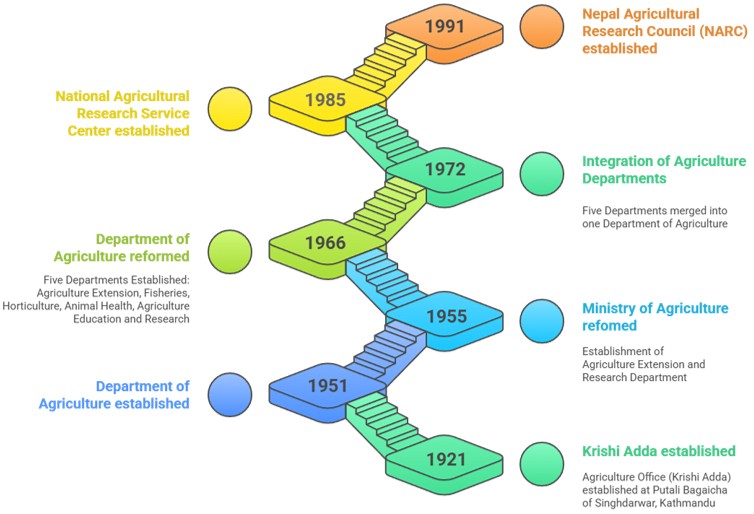
These institutional transformations illustrate Nepal’s continuous efforts to strengthen agricultural research and development in an organised manner. During this process, the evolving concept of a NARS in neighbouring countries also had a remarkable influence on Nepal. Following international practices, and with the vision of making agricultural research long-term, competent, and technically strong, the Government of Nepal promulgated the Nepal Agricultural Research Council Act, 1991, thereby establishing the Nepal Agricultural Research Council (NARC). With the establishment of NARC, agricultural research in Nepal acquired an institutional identity with autonomy, stability, and a long-term perspective.
Objectives
As stated in the Nepal Agricultural Research Council Act, 2048 (1991 A.D.), NARC has three main objectives:
- To conduct and promote advanced studies and research related to agriculture.
- To identify solutions to problems in the agricultural sector.
- To provide necessary support to the Government of Nepal in the formulation of agricultural policies.
To achieve these objectives, agricultural research programs are being implemented through a total of 63 offices, including the central office, ensuring maximum representation of the country’s diverse agro-ecological systems. In addition, outreach research programs and NARC Technology Village programs are being implemented across various districts.
Human Resources
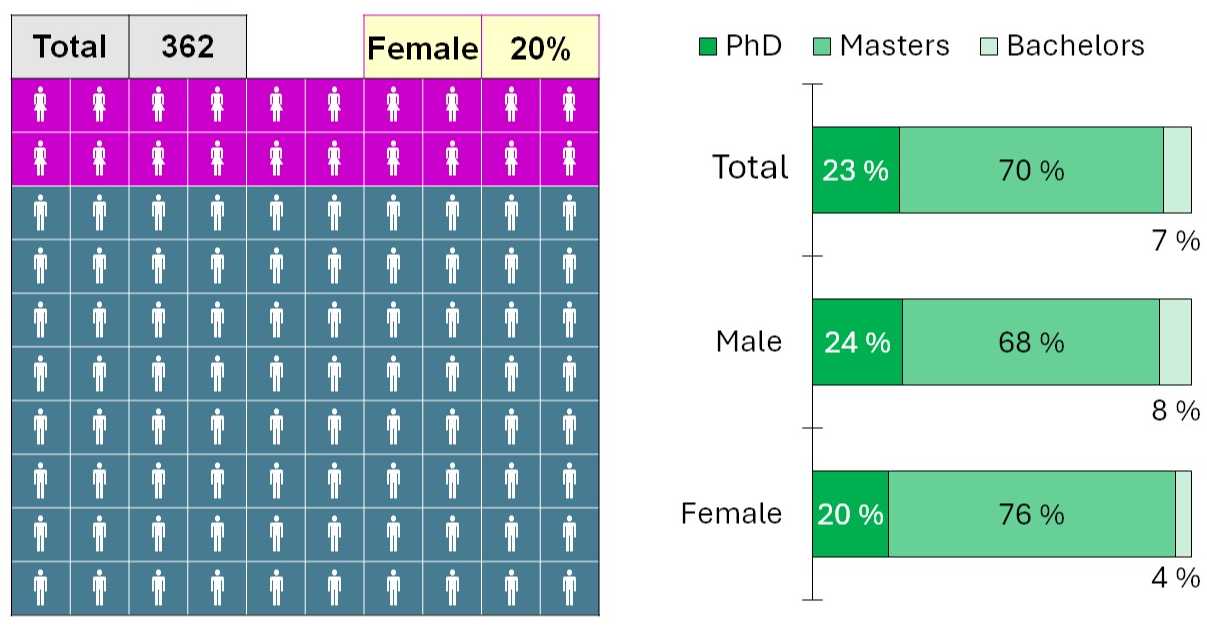
NARC has a total of 1,823 approved staff positions, categorised into three groups: scientific, technical, and administrative/accounting staff. Among these, 413 positions are allocated for scientists and 352 for technical officers. However, only about half of these positions are filled at present. The educational qualifications of the currently employed scientists and technical officers are illustrated in the following figure.
Financial Resources
NARC implements agricultural research programs through a specialised planning system, utilising financial resources allocated annually by the Government of Nepal under the budget sub-heading “Agricultural Research Program”, as well as financial assistance received from donor agencies and international organisations.
NARC's Contribution to the National Economy
The growth of Nepal’s gross domestic product appears to be closely linked to the growth of the agricultural sector’s GDP. Therefore, the contribution of research to agricultural production growth can be considered the backbone of national economic development. Even though only about 0.19% of the national budget and approximately 6% of the budget of the Ministry of Agriculture and Livestock Development are allocated to agricultural research, it is evident that agricultural research has made a significant contribution to increasing agricultural production, strengthening food security, substituting imports, and fostering overall national economic development.
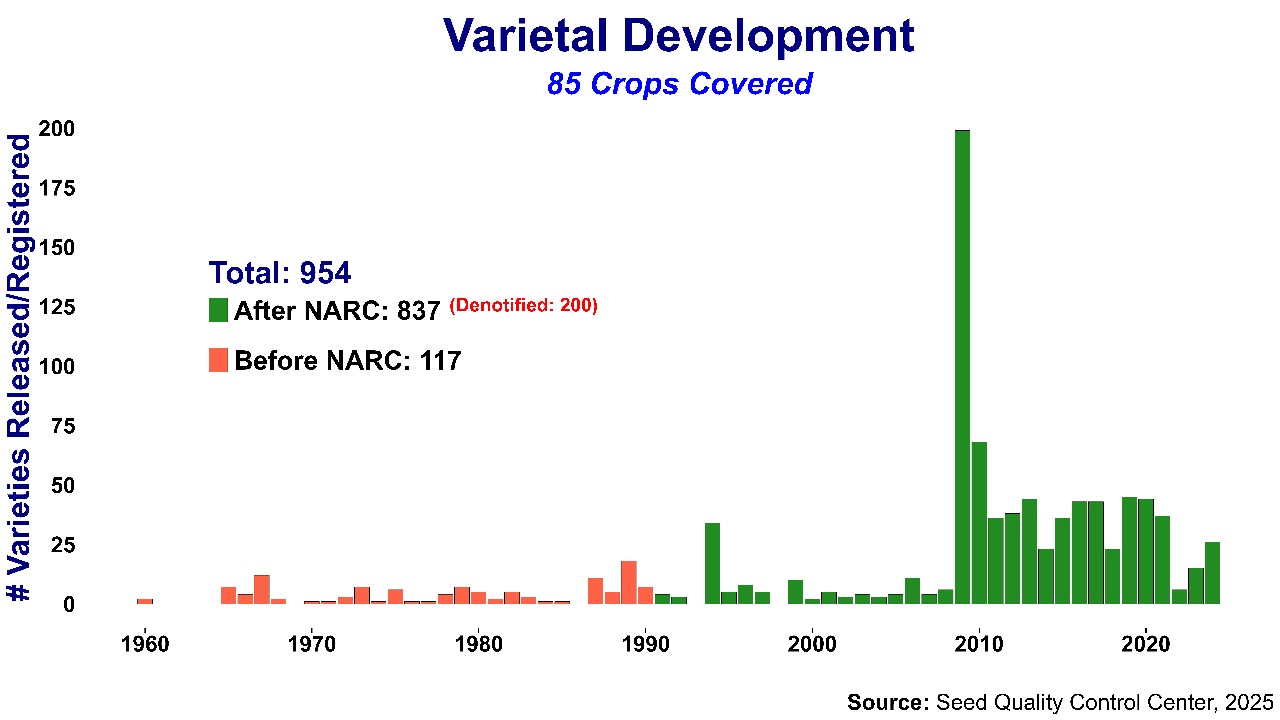
Although modern agricultural research in Nepal began long ago, its pace and institutional structure were further strengthened after the establishment of NARC. In 2017 B.S., the first wheat variety Lerma-52 released in Nepal marked a significant milestone in the country’s varietal development history. Since then, a total of 954 varieties across 85 crops (as shown in the figure below) have been recommended. Among these, about 200 varieties have been removed from the list. The average adoption rate of the recommended varieties varies by crop—35% for rice, 73% for maize, 94% for wheat, 60% for lentil, and 46% for potato—clearly reflecting the level at which farmers have adopted research outcomes.
As shown in the chart below, the cultivable area has increased only marginally, whereas the production of major food crops has grown substantially since the establishment of NARC. The primary factors contributing to this growth include the expansion of irrigation facilities, increased use of chemical fertilisers, availability of improved seed varieties, and adoption of modern farming technologies.
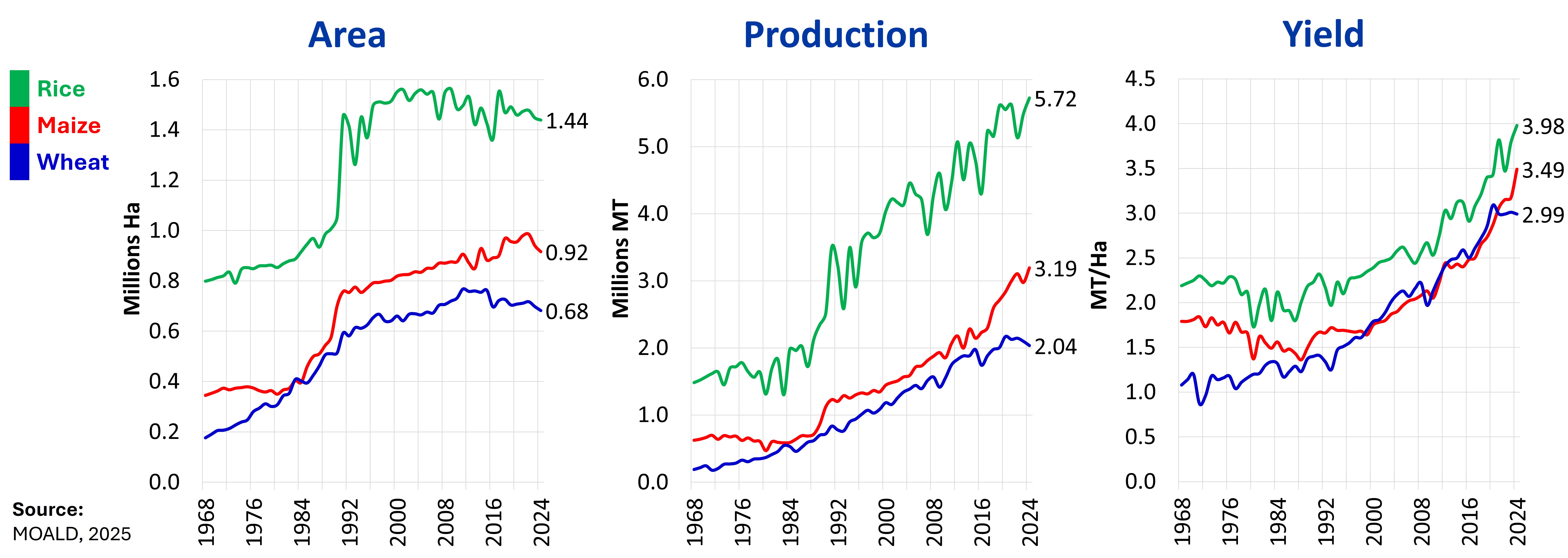
Despite the positive trends in production, billions of rupees are still spent annually on food grain imports. To reduce this expenditure, it is necessary to increase investment in agricultural research and technology dissemination. This would not only strengthen food security but also help replace rising imports, thereby contributing further to the national economy. If the currently available improved varieties and technologies recommended by research are more widely adopted, rice, maize, and wheat production could potentially increase by significantly.
Since its establishment, NARC has contributed not only to the increase in cereal crop production but also to significant growth in vegetable and fruit production. As a result, the availability of seasonal and off-season vegetables has improved, and fresh fruits and vegetables are more accessible throughout the year. The use of technologies and knowledge generated from research in livestock and fisheries has also enhanced commercialization in these sectors. Consequently, self-sufficiency in meat, milk, and fishery products has gradually improved.
From this perspective, the contribution of agricultural research is not limited to just increasing production and productivity. It has had a tangible impact on national food security, agricultural commercialisation, import substitution, and overall strengthening of the national economy. Since investments in agricultural research have multidimensional and long-term effects, it is essential to continue increasing investment in this sector while regularly evaluating its effectiveness, utility, and returns.